Mostrando entradas con la etiqueta book. Mostrar todas las entradas

jueves, 24 de abril de 2014

Book of Hours of Mary Queen of Navarre - Ed Moleiro

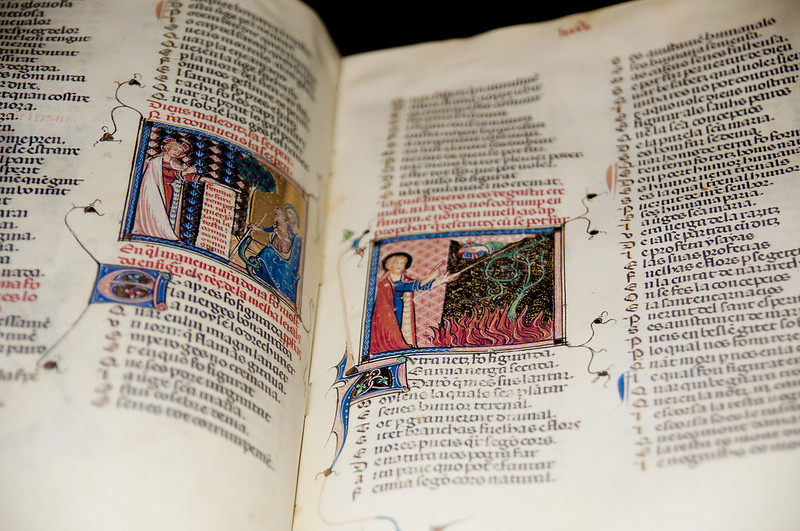
The Book of Hours of Mary Queen of Navarre has been considered the first representative, fascinating and precocious, the internationalism of culture. In illustration luxurious and generous wealth of content with almost exclusive liturgical offices, as hours in honor of his direct ancestor, St. Louis joins.


The April 26, 1342, Pedro of Aragon, asks his wife Mary Queen of Navarre, to send it as soon as possible, from Valencia, the beautiful Book of Hours painted by Ferrer Bassa (pulcriores pray ... quas depinxit Pferrarius Bassa). This paper shows that the admiration for this exceptional work of art is long and was not exclusive of the King, for his thoroughness, attention to detail and perfectionist zeal, is known by the nickname Ceremonioso.


In the next picture you can see the affidavit certifying the authenticity of the fax, and in this case, the number of single shot 737 reduced to 987 copies.


In the Book of Hours of Maria of Navarre treatment of space and the use of rich and delicate hues is particularly noteworthy. Defining characteristic of the artist is the way to portray the faces of the characters straight, pointed nose, with piercing eyes, kind that will last for many years in the painting of the territories of the Crown of Aragon.


The painted scenes in this magnificent manuscript evidence the Sienese influence to soften the plastic language imposed by Giotto, to introduce the music and vitality of gothic drawing: the softer forms and more harmonious compositions.


The intimate details and family, coupled with great sensuality deployed in the representation of the materials, make the codex, preferred by Pedro of Aragon, in the masterpiece of Ferrer Bassa, his masterpiece, the culmination of his art. The perfect example of how the artist used eclectically different influences and personal without being labeled by any of them, forging a personal, original and unmistakable style.


The Book of Hours of Maria of Navarre will also have the honor of being the first book of hours painted on the Iberian Peninsula.


The Book of Hours of Mary Queen of Navarre a book of Gothic illuminated miniatures made ​​in Barcelona Custom reyPedro the ceremonious towards 1342, as a wedding gift from his first wife, Maria de Navarra is. Its author is Ferrer Bassa, according to the royal commission, although stylistically two artists over his workshop, his son Master Arnau Bassa and Baltimore are identified.


The work has abundant illustration that complements the richness of the liturgical content, almost unique features, such as hours in honor of his direct ancestor, San Luis. In the images the treatment of space and the use of live and delicate colors is emphasized. The defining characteristic of the artist's style is the way to show the faces of the characters, with a few pointy noses and eyes penetrante.1 
The copy of the Book of Hours is now in the Marciana Library Venecia.2


When the Crown of Aragon reigned king Alfonso Benigno , were crowned kings of Navarre in 1328 the marriage of Joan II of Navarre and Philip of Évreux , these followed a policy of matrimonial alliances for their children to achieve their political objectives. March 4 Navarra had territorial tensions with the Kingdom of Castile and of these alliances was with the Crown of Aragon to ensure their neutrality in case of conflict with the Spaniards . Thus the kings of Navarre in 1329 a pact with King Alfonso , the marriage of his eldest daughter, Juana Evreux , his son Pedro ten years , future king of Aragon , but finally Juana entered as religious in Abbey of Longchamps near Paris and founded by his ancestor Elizabeth Francia.4 3 This did change plans and pledged their second daughter, Mary, with Peter of Aragon , who had succeeded his father , by a capitulation signed on January 6, 1336 in castle document Anet.3 a dowry of £ 60,000 sanchetes stipulated to pay in installments by the Navarrese king Peter and the residence of Mary Tudela was fixed until it had turned twelve old.5 transfer to this city accompanied by his entourage passed through Roncesvalles , Pamplona, ​​Olite, and reached Tudela on 23 May 1338.6


King Peter had prepared a series of wedding gifts, among which was a crown, six rings with emeralds, rubies and diamonds. Also gave him the deTarazona, Jaca and Teruel towns with their rents and salaries 150,000 year.7 Barcelona was, however, concerned about the dowry that never came and after many failures and finished paying claims Queen Juana when her husband, King Philip had died in 1343.8 
The marriage was held in Zaragoza, but Mary felt unwell during the trip and stopped at Alagon. Peter, who had already accepted several delays the date of the wedding, sent for the Bishop of Châlons and July 25, 1338 a ceremony was held at the same Alagon, Mary became the first of his four esposas.8


The first attributions of authorship made ​​by Santiago Alcolea Blanch aimed exclusively Ferrer Bassa subsequently Alix-Saulnier Pinsard proposed Master of San Marcos as principal accompanied by an assistant not identificado.9 In the last decade of the twentieth century and Rosa Alcoy Joaquín Yarza published two studies on the work, from the analysis of the different stylistic and stylistic comparison with other works of the authors agree in identifying the intervention of three miniaturists who are responsible for homogeneous groups made representations within the book .10 This is not a simple hierarchical shop assistants, but the work is the result of work with an interdisciplinary team participation, supervision and coordination of the master principal.11


The three artists responsible for the bill for this work have been Ferrer Bassa , his son Arnau Bassa and the Master of Baltimore , a member of his workshop.
Ferrer Bassa shop teacher , was a painter known for his work as a painter and miniaturist of the king of the Crown of Aragon. Franco left the original Gothic influence and other painters of the Crown of Aragon, was influenced by the Florentine school and the Sienese school, why it has been called the ' Catalan Giotto . " However, it is believed that his " giottismo 'is a direct influence of the Florentine school , but the brothers Pietro and Ambrogio Lorenzetti which imported the style of Giotto from Asíshacia Siena , 2 where it is likely to travel Ferrer Bassa and which have been observed models that influenced him in his obra.12 addition to this book of hours for Mary Queen of Navarre, his work as a miniaturist anglocatalán highlights the Psalter , a work that had begun shortly before 1200 in Canterbury and after a interruption was completed in Barcelona in 1340 by Ferrer Bassa . The original manuscript is preserved in Paris, at the National Library of Francia.2


Arnau Bassa, son of Ferrer Bassa, began to appear associated with his father from 1345 as part of his workshop. His best known work is the altarpiece of San Marcos commissioned December 11, 1346 for the chapel of the guild of shoemakers had in Barcelona Barcelona Cathedral. In 1348 father and son died of the plague of that year.13 
Master of Baltimore was a miniaturist and painter nearby unknown identity environment Arnau Bassa, 14, who is known by this name because one of his masterpieces, a triptych with scenes of the Virgin which is preserved at the Walters Art Museum Baltimore, in the United States.15 The historian Rosa Alcoy proposed a theory that identified him with Cascalls Jaume, son of Ferrer Bassa and collaborator in some of his work, 16 although other historians do not agree with this atribución


Documentary about the authorship and custom book is not a contract, as had other works commissioned by King Pedro of Aragon to Bassa, but several payments made between June 1 and September 19, 1340 on account of "Oras and retablos ", an expression that had been interpreted as payments for" works and altarpieces "until a new document of 1342 in which the performance of a Book of Hours by Ferrer Bassa was documented was found, confirming that the term "Oras" was not a mistake of the copyist, but the reference to this book of hours for esposa.18


The document in question is a letter sent by the king on April 26, 1342 from Barcelona Maria , who was in Valencia where asked to send by the first person to travel , " the most beautiful hours , which are a case and were painted by Ferrer Bassa '.19 by the date of completion , it was probably a gift tied to the date of consummation of marriage or when Mary became pregnant for the first vez.18
In the 1980s , the medievalist historian Rosa Alcoy developed a thesis about dating that allowed no fix in 1342 as terminus ante quem and placed the manuscript preparation by the year 1346 , which would explain more reasonably intervention of up to three artists in their clothing . According Alcoy, in his letter of 1342 the king would refer to another book for use by the queen, probably owned by the same king Pedro , and then your request would be to order a new book exclusively for ella.20
After the death of Mary in his fourth delivery, the book probably went to one of his daughters , a common practice as you can see in the documentation of the legacy of his sister and queen of France , Blanche of Navarre, to their daughters when he died a few years later.21


...................................................................................................................................................

Call: Ms. Lat. I 104/12640 
Date: c. 1340 
Format: 183 x 142 mm 
704 pages, 391 miniatures illuminated with gold 
Bound in maroon leather embossed in gold 
"Almost-original", first, unique and unrepeatable edition strictly limited to 987 numbered and authenticated by a notary 
ISBN: 978-84-88526-20-5 
Format: 210 x 300 mm 
Pages: 600 
Illustrations: 64 
Language: Spanish 
ISBN: 978-84-88526-18-2 
Fax number: 737 of  987 

PRICE: 5900 € 
Contact via this blog or email: Panguitarod@gmail.com


domingo, 16 de marzo de 2014

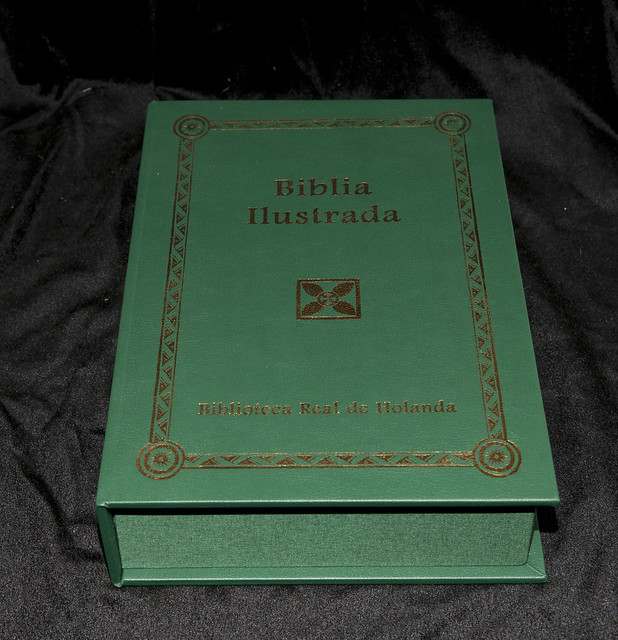
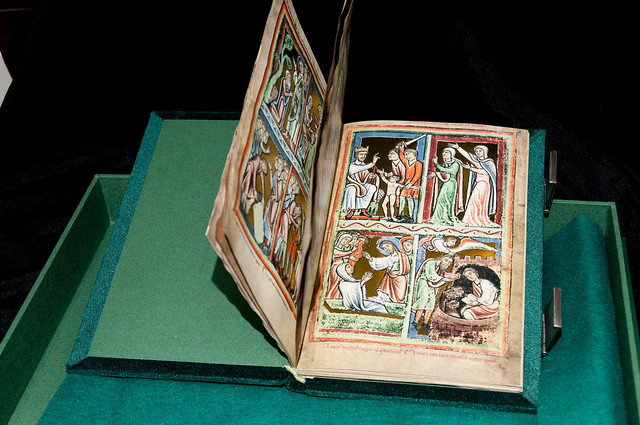
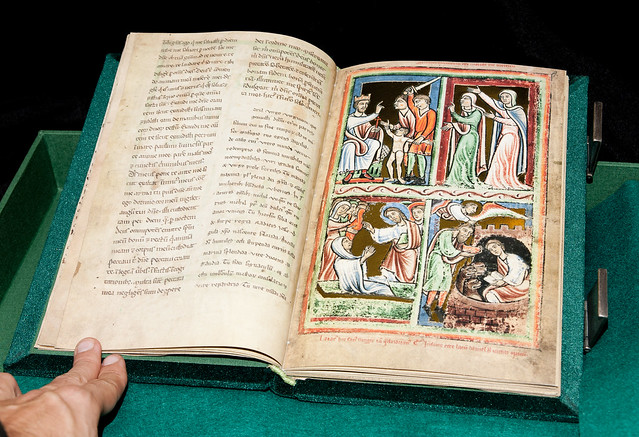
Illustrated Bible Haya - Orbis Medievalis


The development of this unique miniature codex held in the Benedictine Abbey of St. Bertin, wisdom and knowledge center of the France of the thirteenth century. 
In 1200 its own thumbnail, separate and original style, high quality, creating new formulas in the chapter and private devotional book unfolds.


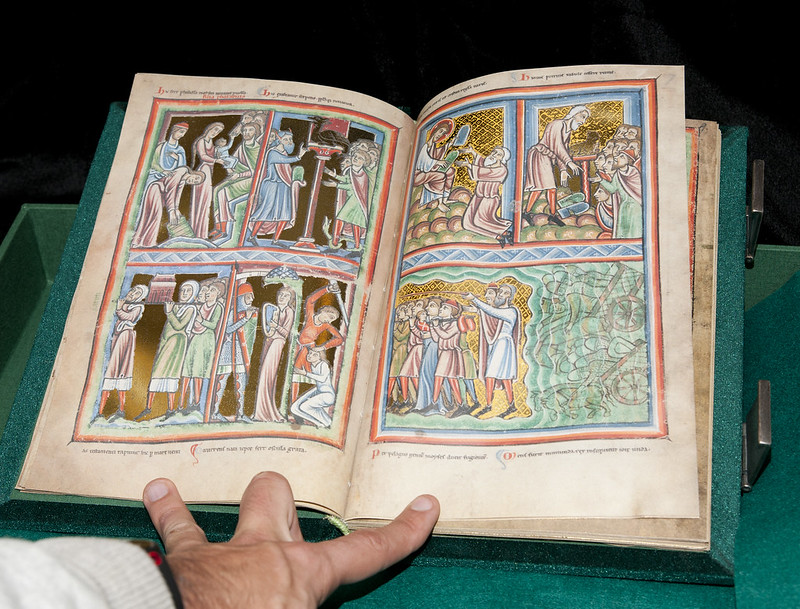
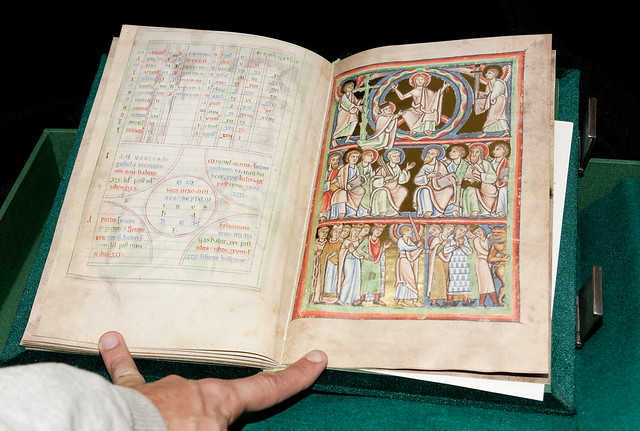
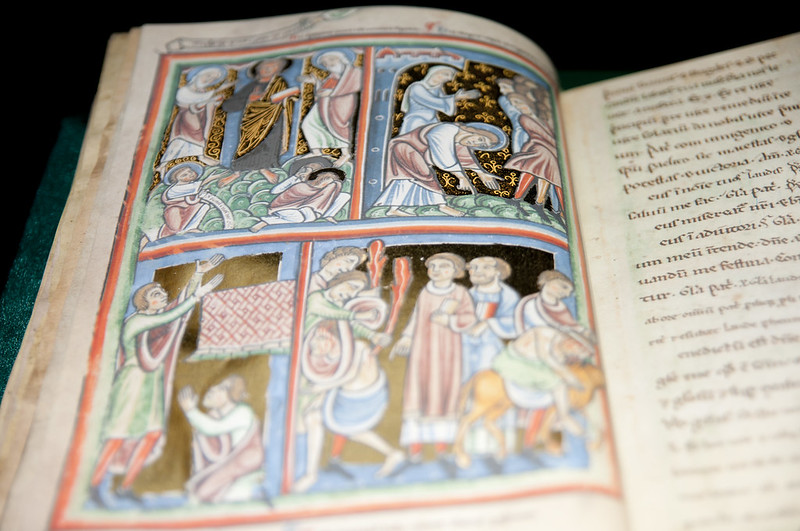
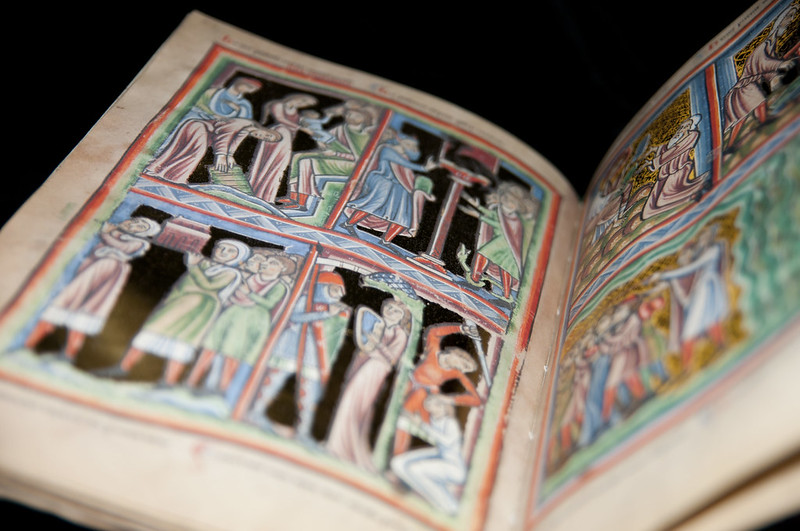
While the teacher who graces the pages of this codex is unknown, the beautiful miniatures that illuminate are part of the so-called style 1200 French, characterized by using gold backgrounds of Byzantine influence, vivid colors and flat shapes, while maintaining some of own conventions of Romanesque. Some experts suggest that probably the 45 illuminated pages that decorate this codex were initially designed to illustrate the preamble of a psalter, hence a clear influence of the English psalters appreciate, although the reason is unknown which was not finally conducted.


Miniada Each page is divided into four scenes depicting stories from the Old and New Testaments, as well as accounts of the life and martyrdom of the saints. A total of 172 scenes on colored backgrounds gold and silver represent the cycle of salvation, beginning with Adam and Eve in the Garden of Eden and ends with the final judgment.


Notably Folio 1v. a map of Jerusalem, of great beauty and uniqueness. Everything indicates that this map was added long after the whole work.


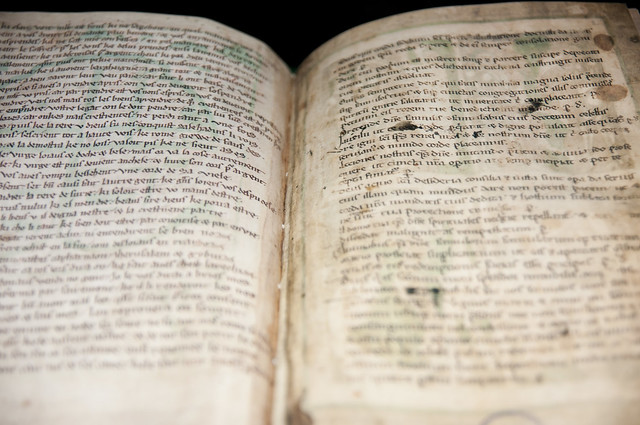
The text accompanying the miniatures was included after making them. Throughout the thirteenth century, the manuscript passed through several hands and was adding texts in Latin and French. This has prompted some scholars have hesitated to put a specific title to the codex, proposing "De Hebraeis et Christianis Chronicon" as the more correct. This fact, coupled with the originality of his models, makes this manuscript unique.


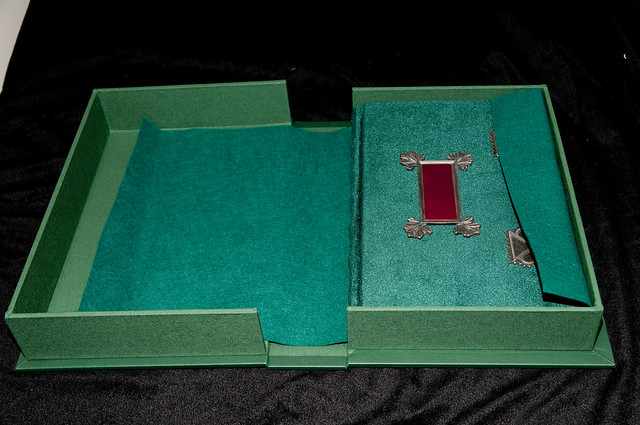
A beautiful green velvet binding safeguard the pages of this manuscript, dating from the eighteenth century. The brooches that have carved a double Garrison Greek cross.


The clear influence of Byzantine illuminations, and the reproaches and complaints against the court of Rome concerning the Second Crusade that appear in both the first and last page, suggest to some experts and also its last owner, Joseph Désiré Lupus, that this codex was made for the Byzantine emperor Manuel I Comnenus, nicknamed "El Grande" and famous for his charisma and his passion for the West, allowed passage through his dominions to two armies of the Second Crusade. While the Byzantine troops tried to control the behavior of the Crusaders, there were many violent clashes between Franks and Greeks who were about to precipitate open conflict between the Emperor Manuel I and the Crusaders.


This manuscript was part of the private collection of Joseph Désiré Lupus (1766-1822) until 1819, date on which King William I of purchase. In 1823 became part of the funds of the National Library of the Netherlands, where he currently remains.


Details of the inside pages.


........................................................................................................


Date: End of XII century. 


Location: Royal Library in The Hague, ms. 76F5. 

Format: 255 x 165 mm. 

Length: 94 pages. 

Source: Saint-Omer, Abbey of St. Bertin. Northwestern France. 

Lighting: 45 full-page miniatures. 

Binding: green velvet with silver clasps. 
Language: Latin and French. 

Number: 333 of a single run of 695 copies 

PRICE: 2000 € 
Contact via this blog, or email: panguitarod@gmail.com or ventadefacsimiles@yahoo.com
sábado, 18 de enero de 2014

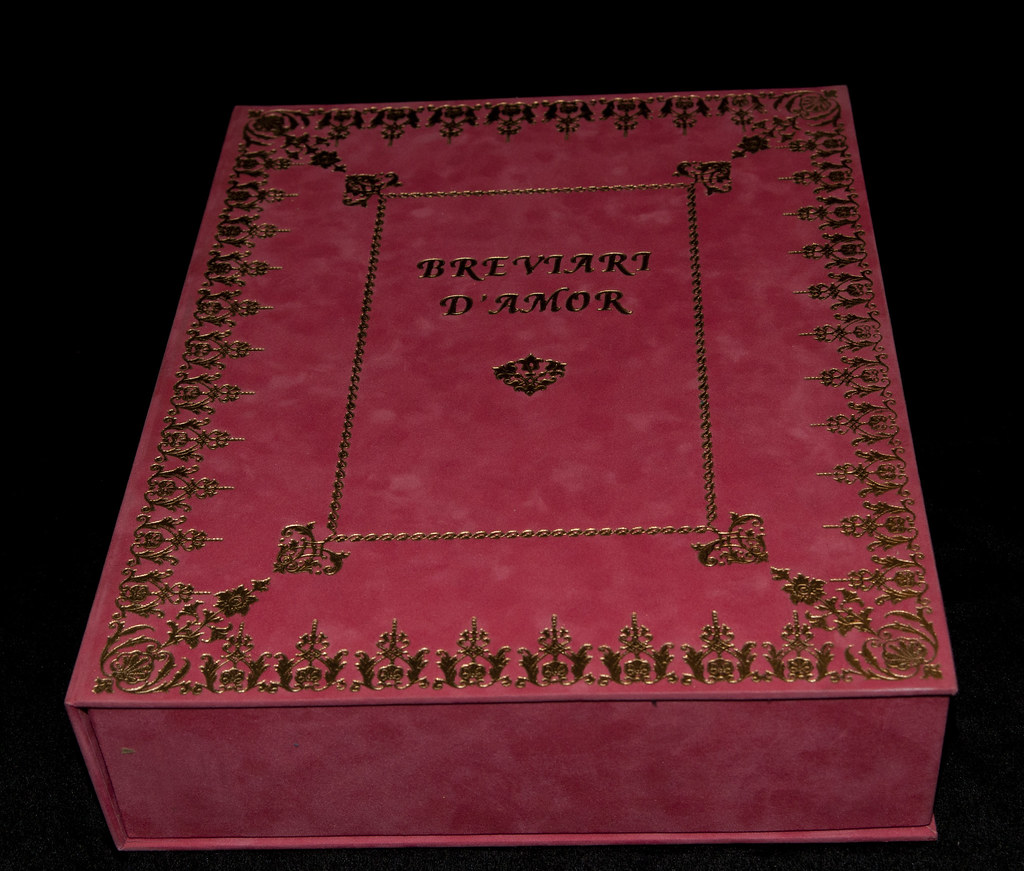
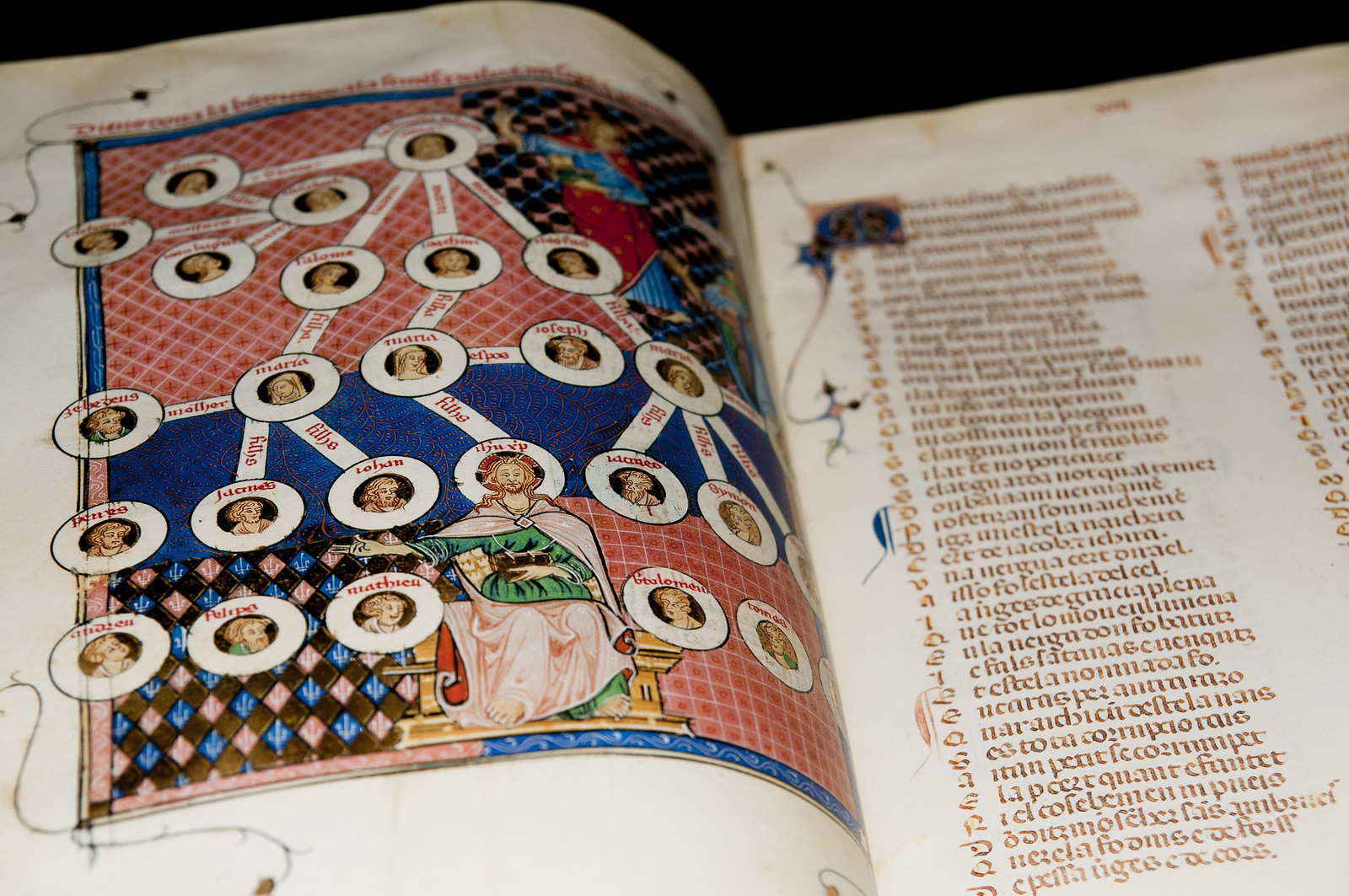
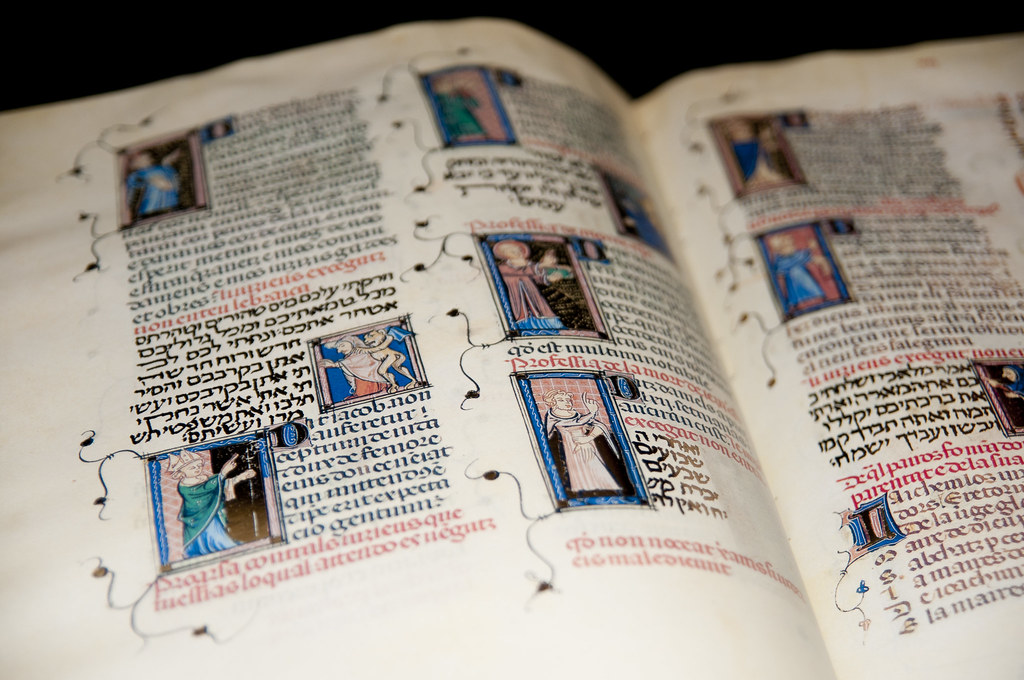
Brevary D´Amor - AyN Edi.


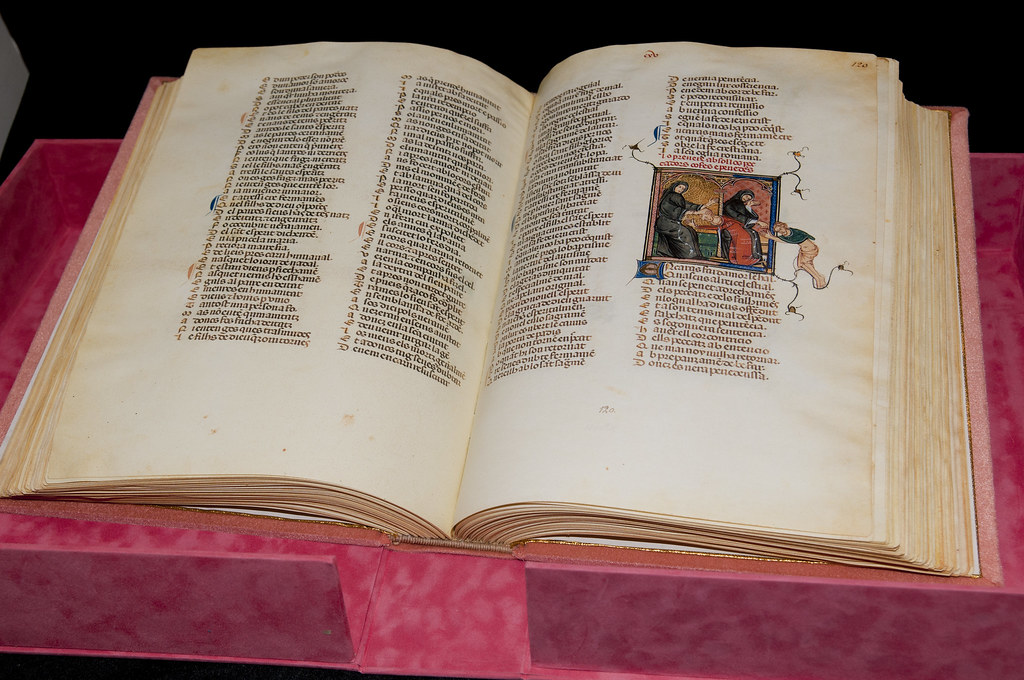
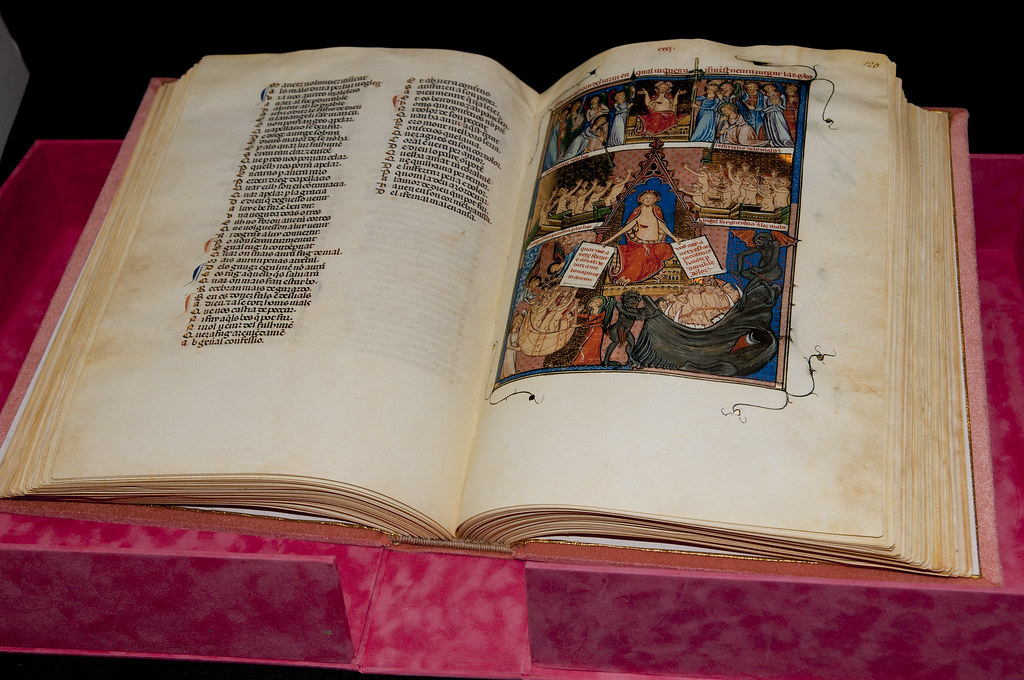
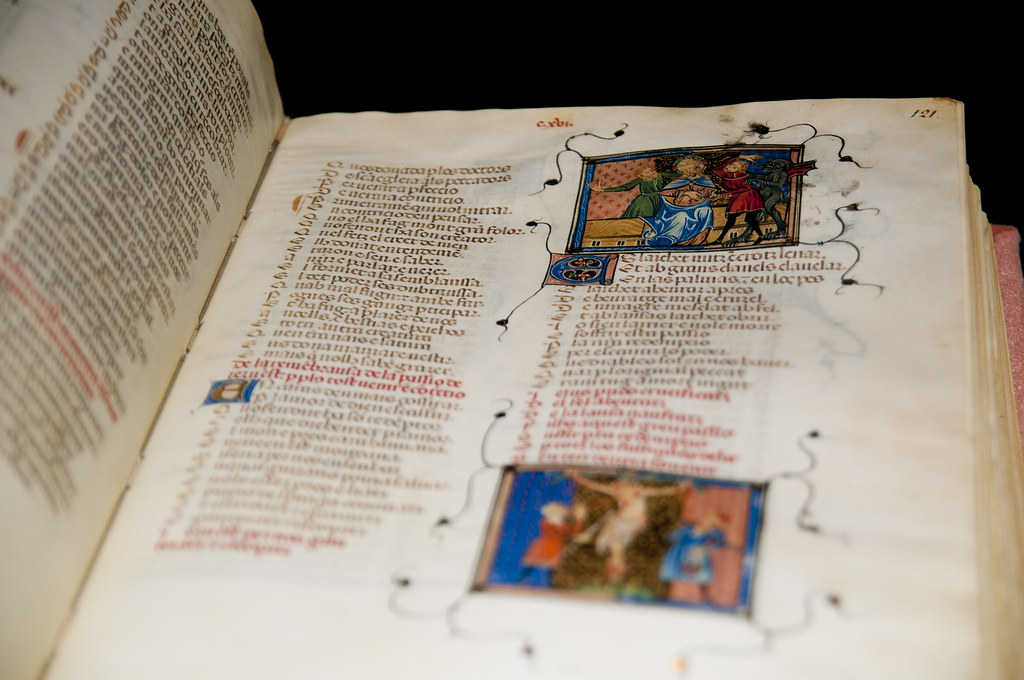
The author of this manuscript, which is preserved in the National Library of Russia (St. Petersburg), was a troubadour of Béziers Matfres Ermengans in the fourteenth century.


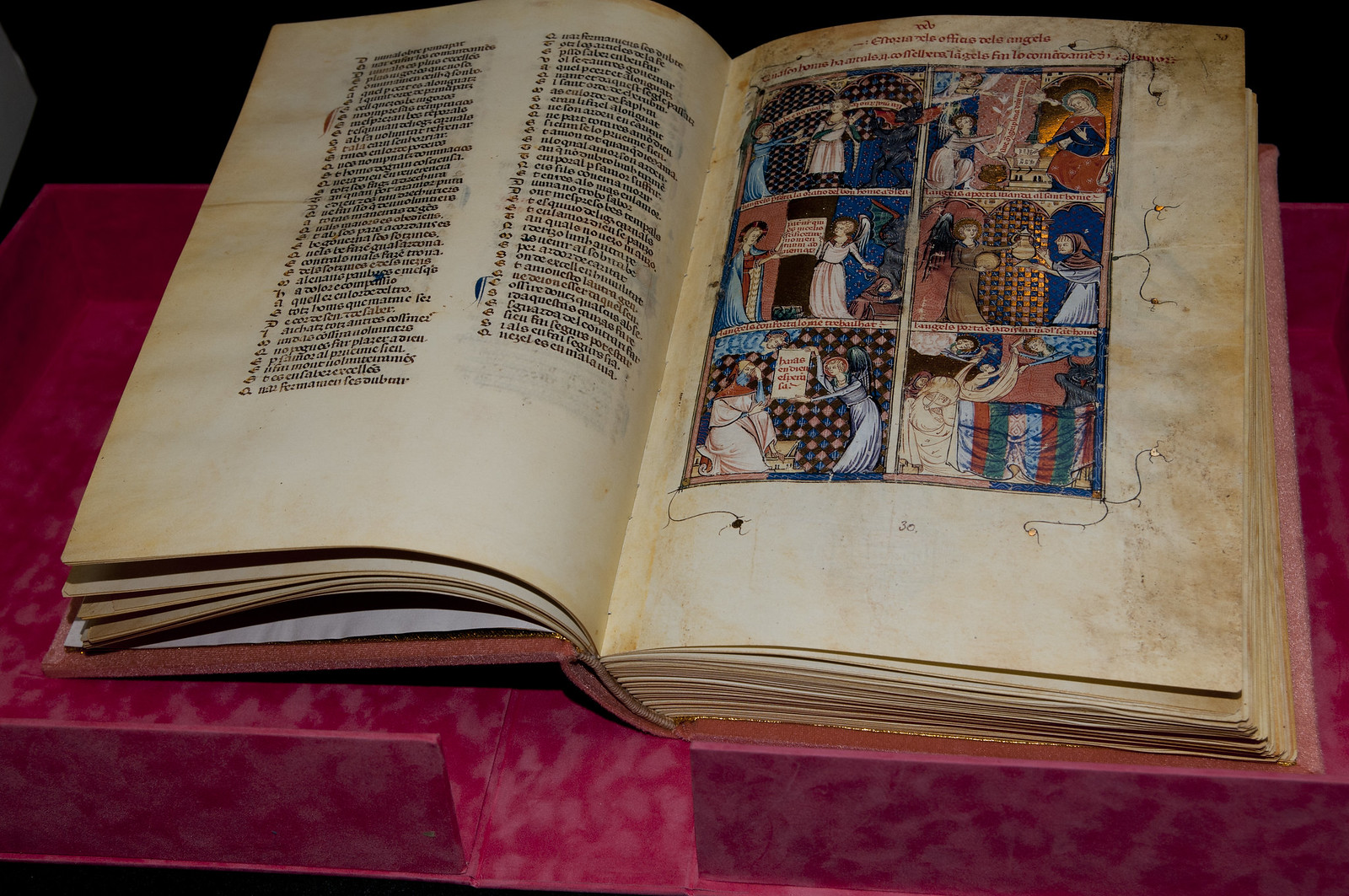
This loving compendium written by the Provençal troubadour, develops the main idea that the world emanates love in all its varieties. Love of God, promoan to earthly pleasures and finally love towards women and temptations that accompany it.


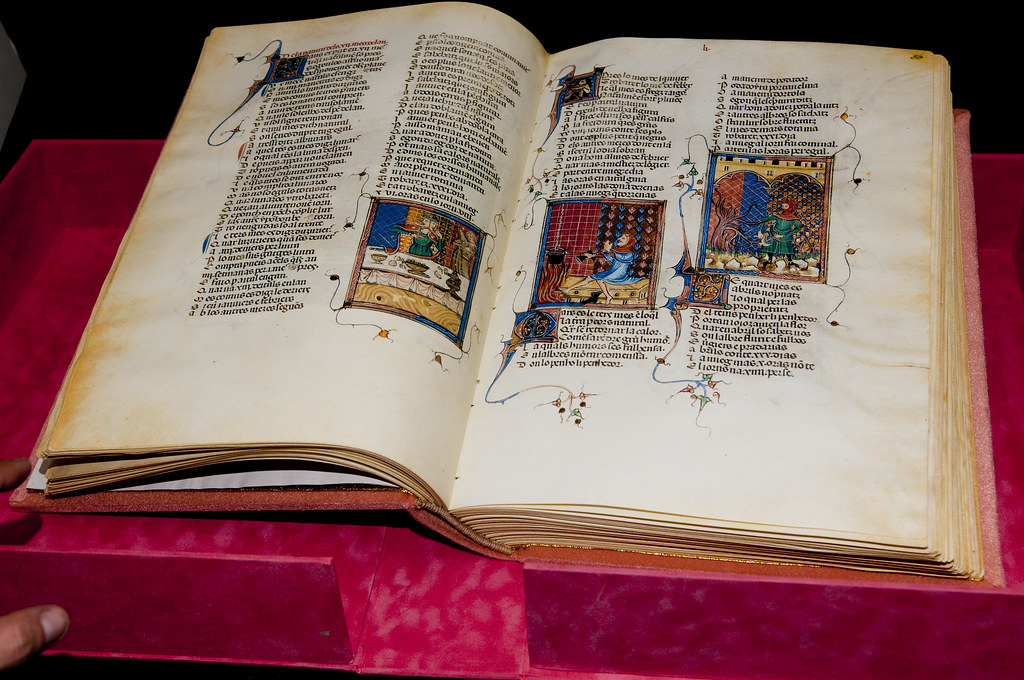
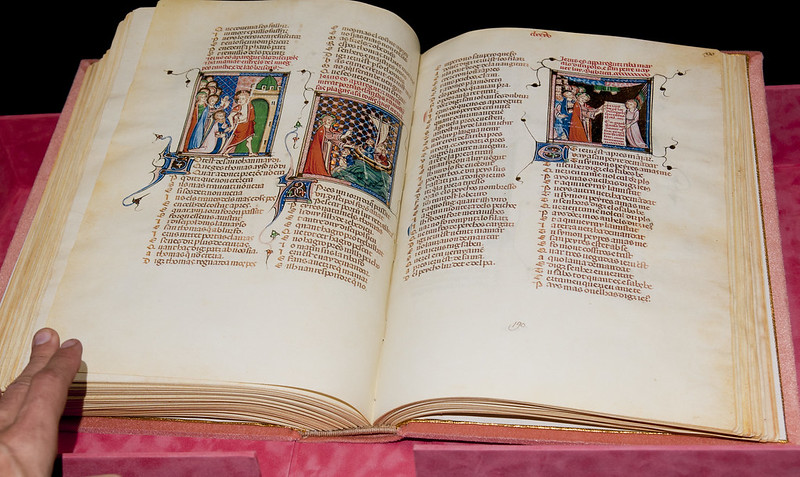
The miniatures that illustrate provide extensive information about the daily life of the period, costumes and household utensils they used.


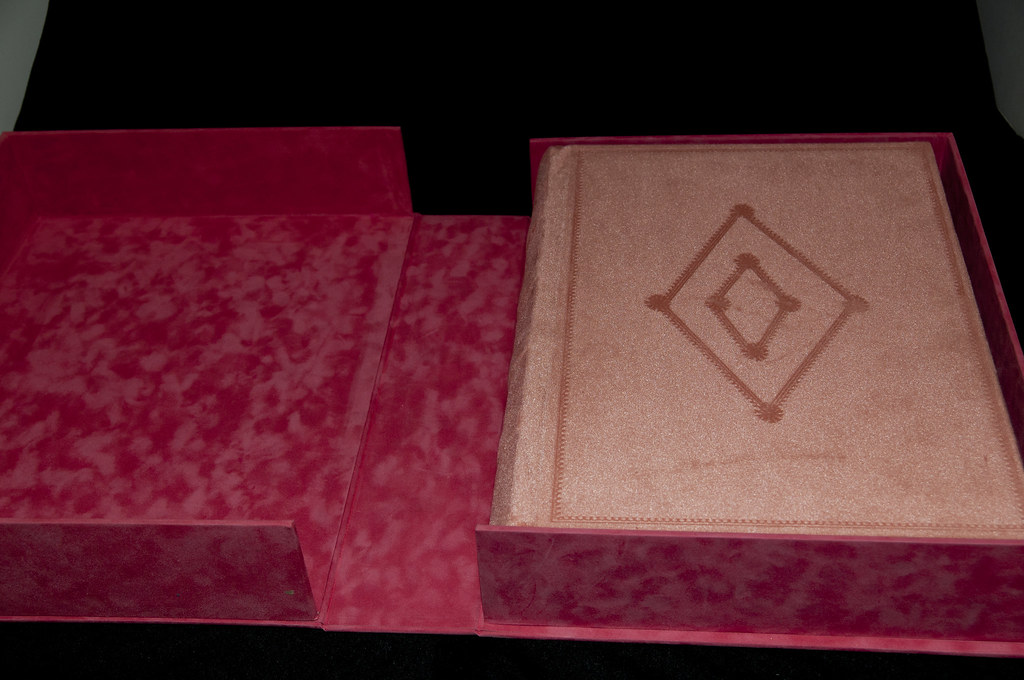
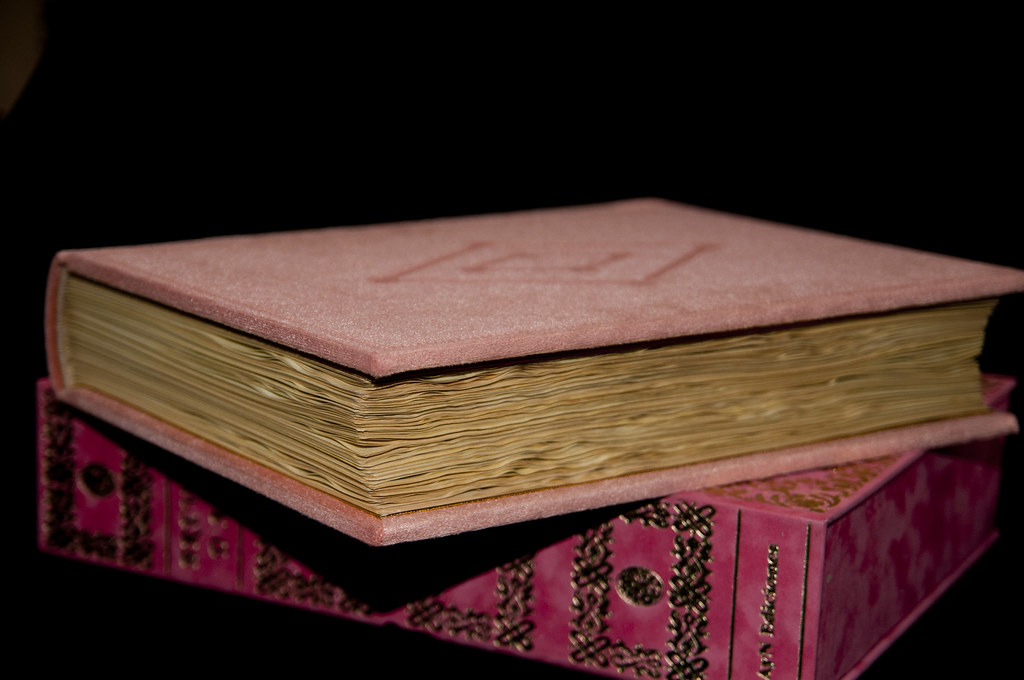
The binding is in pink patterned velvet off cardboard.


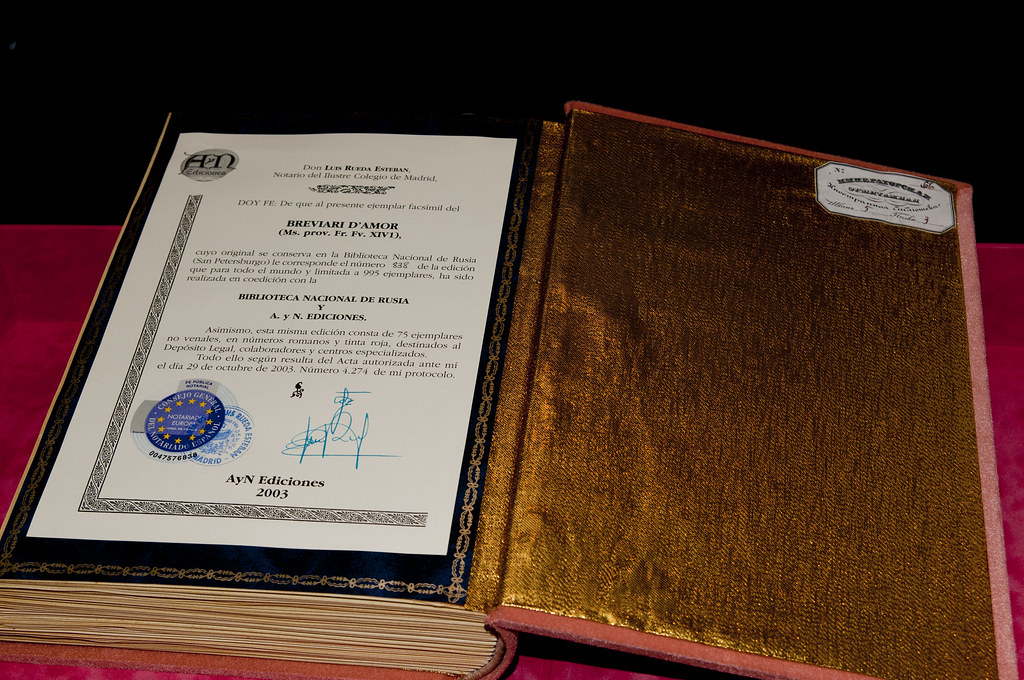
This is 838 of 995 facsimile copies is limited to the roll. Notarized the affidavit is included at the end of the book, signed and sealed.


....................................................................................................................................................

ORIGINAL: National Library of Russia (St. Petersburg) Prov Ms. F. V. XIV.1  
AUTHOR: Matfres Ermengaus Beziers  
CENTURY: S. XIV  
PAGES: 504
  MINIATURES: 29 full-page and 192 of different sizes
  BINDING: Velvet pink patterned off cartilina  
SIZE: 350x245 mm.  
LANGUAGE: PROVENZAL

 Number 838 of an edition of 995 copies
PRICE: 3400 € Contact via this blog, or email: panguitarod@gmail.com or ventadefacsimiles@yahoo.com

lunes, 2 de diciembre de 2013

Book of Hours of Charles V - Ed Versol


In 1999 published a facsimile Versol Deluxe Book of Hours of Charles V, the original of which is preserved in the National Library of Spain (Code Vitr. 24-3). This facsimile of his last 4,850 PVP was in euros, of which only 575 numbered copies were made, is sold out.


One of the most important manuscripts of which are kept in the National Library of Spain is known as the Book of Hours of Charles V. The rationale for membership is based on a handwritten note from the second sheet Guardian: Hic liber fuit Imperatoris Caroli Magni V. For its high content educational interest, possibly he was given was very young. He belonged to the house of Habsburg until Philip III donated to Cardinal Francisco de Joyeuse.


The codex, written in French bastard letter is as Durrie, "particularly interesting for the history of lighting Work." In its 336 pages, approximately 320 are lavishly illustrated with paintings muralists and very striking and sensationalism, making this codex is an exceptional gem. included, also, many historiated miniatures (over 700) in many varied fringes.


It contains several double page (the victorious entry of Heraclius into Jerusalem Cross with Christ, David's victory over Goliath or the meeting of the three death knights), which would be sufficient to qualify the codex as a masterpiece.


They have less merit the rest, which combined with short texts, clearly involve a didactic purpose. Another large number of them have been made in full page and culminated with gold leaf. 


Detail where you can see the quality certification of the work, notarized. This is the copy number 444 in a unique and unrepeatable edition of 575.


Without any doubt, this Book of Hours, is one of the most beautiful and beautiful of our artistic heritage. Although the prologue does not advertise, the Book of Hours of Charles V served its holder as a genuine encyclopedia moralizing, because among the many Bible stories are interspersed cycles: concordance between Sibyls and Prophets, Legend of the Cross Miracles of the Virgin, concordance between Prophets and Apostles Creed composition, Acts, Chronicles of the Life of David and Life of Job, Legend of the Three Living and the Three Dead, Dance of Death, etc..


This proliferation of images reminds us that the value of the Book of Hours with illustrations served more to be seen than to be read, and this particularly shattered the previously established to show a new civilization of the image.


Charles I of Spain and V of Germany there are several Books of Hours but the National Library of Spain is considered the most beautiful and interesting.


This manuscript is as Durrie, particularly interesting for the history of lighting work.


In its 336 pages, 320 are richly illustrated with paintings by muralists and very striking and sensationalism, making this codex is an exceptional gem.


Included, also, many historiated miniatures (over 700) in many varied fringes. It contains several double page (the victorious entry of Heraclius into Jerusalem with the Cross of Christ, David's victory over Goliath or the meeting of the three death knights), which would be sufficient to qualify the codex as a masterpiece.


Book studies helps to read the codex.


Exterior View. You can see the box in which are included both as facsimile study book. All collected in a simulation of a book with a sleek aesthetic.

Side of the box Vista.


The codex , written in French bastard letter is as Durrie , " particularly interesting for the history of lighting Work. " In its 336 pages, 320 are richly illustrated with paintings by muralists and very striking , making this codex is an exceptional gem. Included , also, many historiated miniatures (over 700 ) in many varied fringes . It contains several double-page : the triumphant entry into Jerusalem Heraclius with the Cross of Christ, to win David over Goliath, and I find the three Death Knights , which would be sufficient to qualify the codex as a masterpiece. Another large number of them have been made in full and culminated with gold leaf page . " Although not announce the prologue , the Book of Hours of Charles V served as its possessor a veritable encyclopedia , because between the biblical stories are interspersed various cycles: Concordance between Sibyls and Prophets, Leyendas de la Cruz , Milagros de la Virgen, Concordance between Prophets and Apostles Creed composition , Acts , Chronicles of the Life of David and Life of Job, the Legend . three Living and the three Dead, Dance of Death , etc. This proliferation of images indicates that an illuminated Book of Hours served more to be seen than to be read , and this one, particularly , shattered the established to show a new civilization image .


The manuscript belonged to the Habsburgs until Felipe III gave it to Cardinal Francisco de Joyeuse Narbonne during his visit to the Monastery of Montserrat. In the eighteenth century was part of the library of Cardinal Zelada, and in 1869 joined the National Library with other codices of the Cathedral of Toledo.


Far from the typical pastoral scenes , images of the Calendar represent human life throughout the months of childhood , youth and maturity of two brothers, one pious and another sinner , dying in December succeed with year , passing one's soul to heaven and the other to hell. In the left image ( f. 5 ) we applied the child with a book in your hands ( the pious future) and the other with a set of tables ( the sinner future). Then ( f. 16) , God showed Adam all the beings of Paradise: animals, birds , fish , and water and stars. These six models are dedicated to Eve, the serpent, the forbidden fruit and the expulsion from Paradise . Then the cycle of Cain and Abel with four other splendid illustrations , followed by the patriarchs to Joseph in Egypt is represented . This Book of Hours devoted to Genesis 27 miniatures ( f. 16-42 ) and each contains a separate record to abound in the narrative : more than historiadas many Bibles .


Chapter IX (f. 44-51) deals with Sibyls and Prophets Matches between predicting the New Testament. Thus, Eritrea sibyls (Annunciation and Christmas), Persian (Apocalyptic Virgin and Child with treading the serpent), libica (Mother and Son illuminating the darkness), Samos and appear Cimmeria (The Nativity and the Virgin nursing the Child), Europe and Tiburtina (the Flight into Egypt and Jesus is slapped), Agrippina and Delphic (Passion) and Helespóntica and Phrygia (Crucifixion and Resurrection). The text gives the names of the prophets with the predictions of these oracles relate.


Chapters X and XI (f. 52-61) discuss the Exodus, XII and XV (f. 62-125) Life of Christ in Art 63. Also includes 12 miniatures of Revelation (f. 243-254) within the New Testament cycle. The Life and Miracles of the Virgin have dedicated 20 illustrations (Ch. XV-XVII). These illuminated folios, and many remain to 320, are made within the liturgical cycles of the Great Hours.


In the manuscript several artists and a main hand would be Jean Poyet, enlightening workshop are Charles VIII. Negotiations of Anne of Brittany with Isabella for a marriage agreement with her ​​daughter Claudia Prince Charles (Treaty of Blois, 1504) when both were just 4 years old, possibly motivated the gift of this book specially lit for education the future Charles I. The deal did not materialize, but the manuscript was completed shortly after and ended in the Library of the Habsburgs.


...................................................................................................................................................................

Format: 230 x 153 mm
.Dating: XVI century (c. 1503)
Pages: 320, and 3 full-page spreads.
Binding: Handmade.Natural skin on wood and metal corners.Book studies: comments and studying the text and thumbnails.
Authors: Julian Martin Abad, Anna Muntada, Elisa and Francisco M. Varela Gimeno Blay.Thumbnails: 320. Almost all full page and three spreads
Global Issue: 575 copies certified
PRICE: 4400 €
Contact via this blog, or email: panguitarod@gmail.com or ventadefacsimiles@yahoo.com
Depleted Edition Publisher and difficult to get.